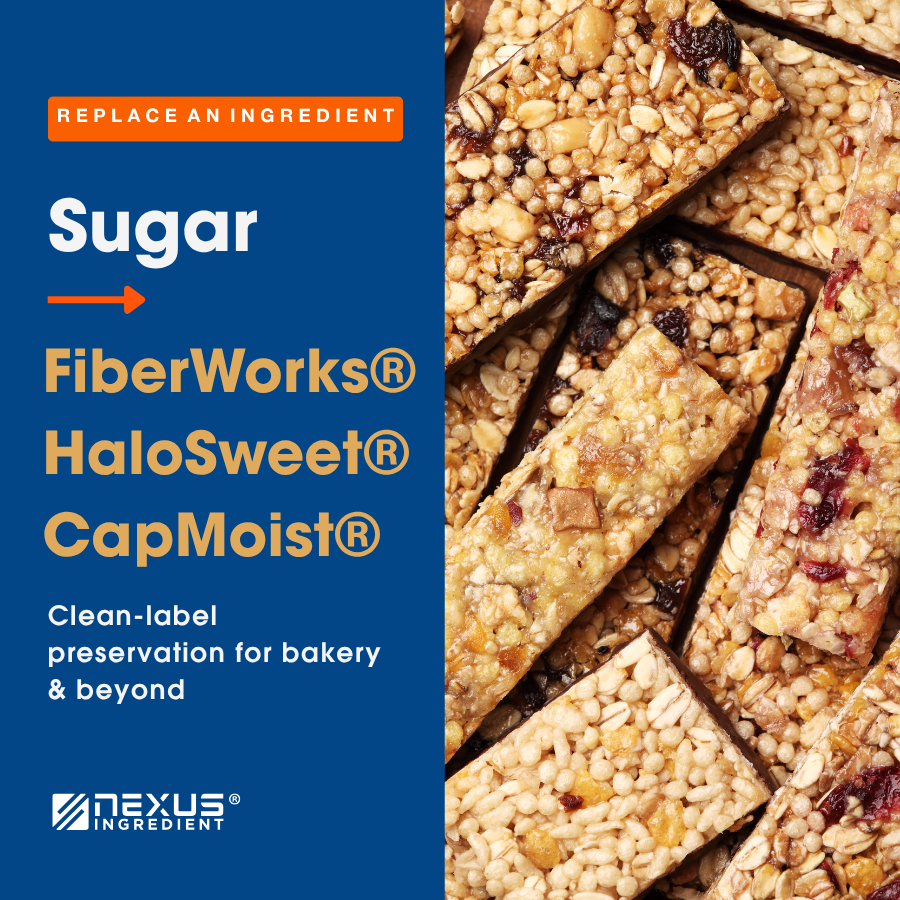
Sugar does far more than sweeten. It adds bulk, holds moisture, builds texture and browns in the oven. That is why sugar replacement is rarely a one-ingredient swap: you need to replace each job sugar was doing. This guide compares four Nexus Ingredient tools for reducing or removing sugar, and shows which one fits which job.
This is part 5 of our Replace an Ingredient series. New to the series? Start with our guide on how to replace E-numbers.
What sugar does in a formulation
- Sweetness: the obvious one, and often the easiest to replace.
- Bulk and body: sugar makes up much of the weight and volume of bars, cereals, baked goods and confectionery.
- Moisture: sugar binds water, which keeps products soft over shelf life.
- Browning and texture: sugar caramelises and contributes to colour, crunch and chew.
Each tool below covers a different mix of these jobs. See our sugar reduction and elimination solutions for the full range.
The four tools at a glance
| Product | What it is | Main job | Formats | Label declaration options |
|---|---|---|---|---|
| FiberWorks® | Soluble tapioca or corn fibre (resistant dextrin), >70% and >90% fibre grades | Bulk, body and fibre; about 60% the sweetness of sugar (powder) | Powder and syrup | Soluble Tapioca Fiber or Soluble Corn Fiber; or Resistant Dextrin |
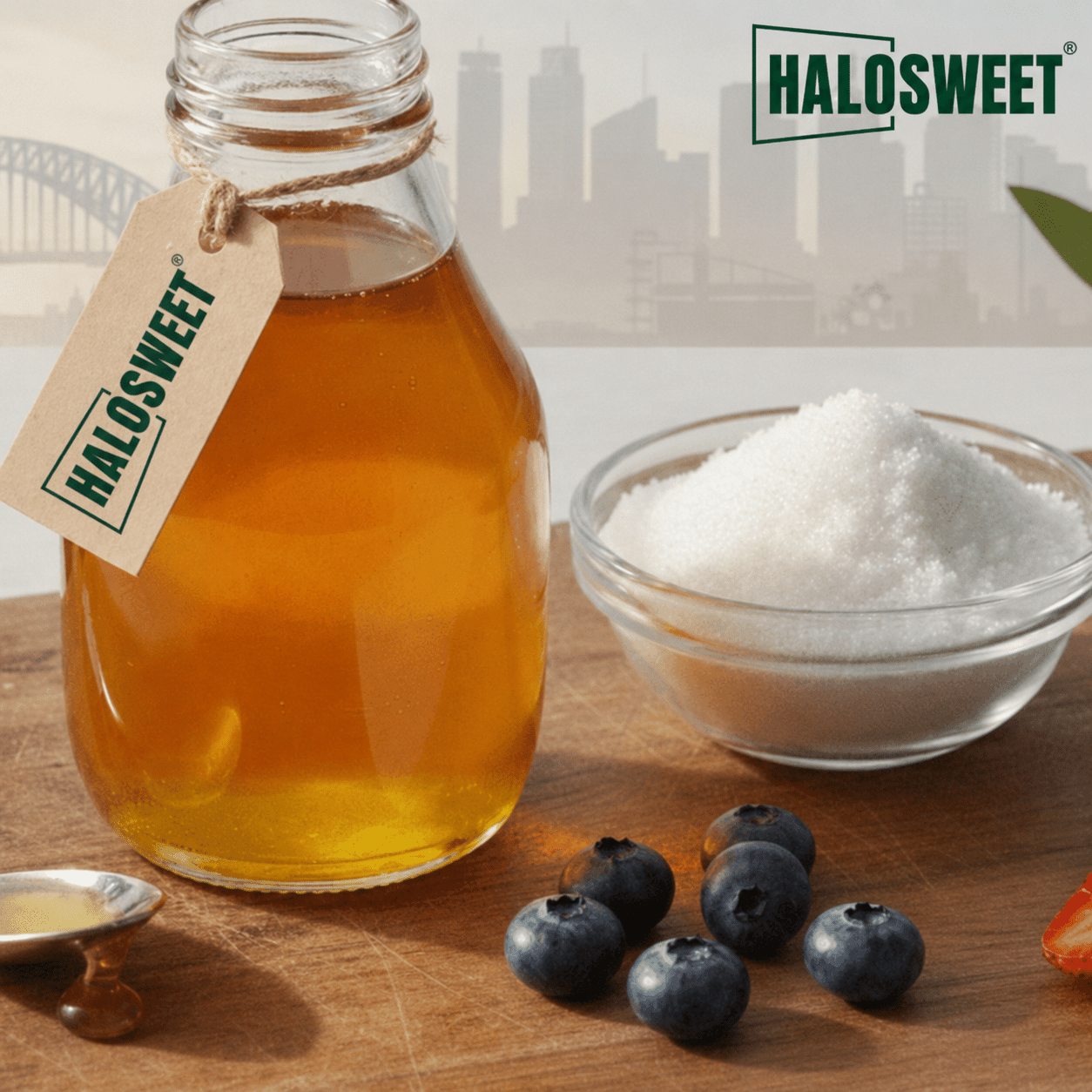
| HaloSweet® Allulose | D-allulose, a rare sugar | Sweetness and browning; 70% the sweetness of sucrose at 0.4 kcal/g | Crystalline powder and syrup | Allulose; or D-Allulose |
| CapMoist® Sugar Free | Cassava root syrup with 50% dietary fibre and ≤ 2% sugar | Moisture and binding with sweetness, in place of refined sugar | Syrup | Cassava Root Syrup; or Cassava Fiber Syrup |
| CapMoist® EnergyWell | Rice syrup and grape juice humectant syrup | Lower-sugar sweetness and moisture, as an alternative to refined sugars | Syrup | Rice Syrup, Grape Juice; or Rice Starch, Grape Juice |
FiberWorks®: replace sugar’s bulk and add fibre
FiberWorks® is a soluble dietary fibre made by enzymatic hydrolysis of tapioca or corn starch. It is used as a clean-label sugar replacer, sugar reducer, fibre booster and low-calorie bulking agent, and it is heat stable and fully soluble. It improves texture, binding, mouthfeel and body, which makes it the natural choice when sugar was providing the structure of a product. Learn more about increasing fibre content and binding and bulking.
In the US, FiberWorks® is recognised by FDA as a dietary fibre, so it can be declared as dietary fibre on the Nutrition Facts panel.
HaloSweet® Allulose: replace sugar’s sweetness and browning
HaloSweet® Allulose delivers 70% of the sweetness of sucrose at 0.4 kcal/g. It browns and caramelises much like sucrose, which makes it particularly suited to baked goods, and it is stable at high temperatures and fully soluble.
Labelling depends on your market. In the US, under FDA’s final guidance on allulose labelling, allulose is not counted toward Total Sugars or Added Sugars on the Nutrition Facts label. In Australia and New Zealand, FSANZ approved D-allulose as a novel food in 2024 with conditions on how it is made and used (application A1247). In the EU, EFSA could not establish the safety of D-allulose as a novel food in 2025, so it is not authorised there. Check the rules in each market you sell into before reformulating.
CapMoist® Sugar Free: replace sugar’s moisture
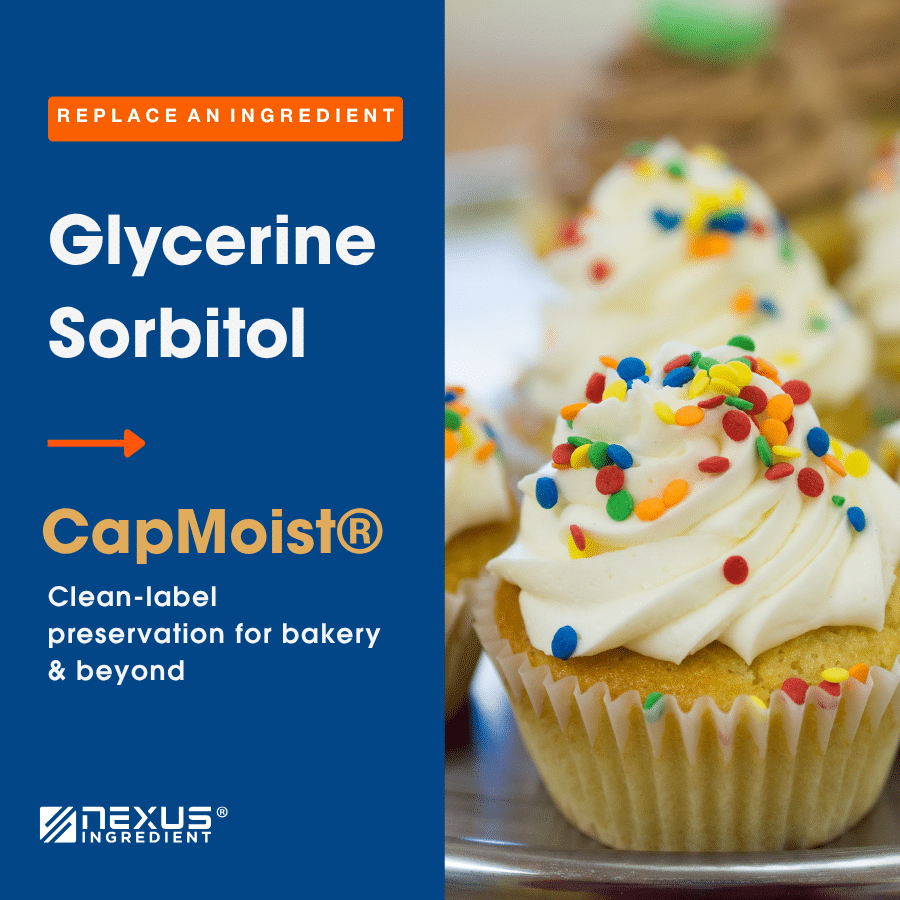
CapMoist® Sugar Free is a humectant syrup made from cassava root, with 50% dietary fibre and no more than 2% sugar. It can be used in place of refined sugar while doing the moisture job sugar used to do: water activity and moisture control, moisture retention, dough machineability and shelf-life extension. Its data sheet notes it supports sugar-free formulation at usage below 25%.
CapMoist® EnergyWell: a lower-sugar natural syrup
CapMoist® EnergyWell is a naturally sweet, lower-sugar humectant syrup made from rice syrup and grape juice. It is designed as a natural alternative to refined sugars, and it improves texture and mouthfeel, adds moistness and extends shelf life. Typical dosage is 1–20% of total formulation weight.
Which tool for which job?
- Sugar was providing bulk and structure (bars, cereals, baked goods): start with FiberWorks®.
- You need sweetness and browning (baked goods, confectionery): start with HaloSweet® Allulose, where it is permitted in your market.
- Sugar was keeping the product soft (bars, bakery, fillings): start with CapMoist® Sugar Free.
- You want a natural, lower-sugar syrup: start with CapMoist® EnergyWell.
Many formulations need more than one of these, for example a fibre for bulk with a sweetener for taste. Common applications include protein bars and balls, cereals and granola, confectionery and beverages, yoghurt and premixes. Moisture matters too: read our post on replacing glycerine and sorbitol.
Frequently asked questions
Can one ingredient replace sugar completely?
Rarely. Sugar does several jobs at once, so most reformulations combine a bulking fibre, a sweetener and, where needed, a humectant. A trial against your current formulation shows which mix works.
Is allulose excluded from sugars on the label everywhere?
No. FDA’s guidance applies to the US Nutrition Facts label only. Rules in Australia, New Zealand, the UK and the EU differ, so confirm the position for each market with your regulatory team.
How will these appear on my ingredient list?
Each product has its own declaration options, shown in the table above. Confirm the right declaration for your market.
Ready to start? Find more sugar replacements in our Ingredient Replacement Finder, or request a sample to begin your trial. You can also contact our team at info@nexusingredient.com.