Isomalto-oligosaccharides — IMO — sit in an unusual spot in the clean-label toolbox: part sweetener, part soluble fiber, and the subject of far more nuance than most ingredient one-pagers admit. For food scientists and R&D teams working on sugar reduction and fiber enrichment, IMO is one of the most useful — and most misunderstood — ingredients available. This guide explains what MetaSweet® IMO actually is, how it behaves in a formulation, how much to use, what the science genuinely supports, and where the regulatory lines fall, so your team can use it with confidence and label it correctly.
What IMO Is
MetaSweet® IMO is a soluble carbohydrate produced by the enzymatic conversion of tapioca starch into a mixture of glucose units joined largely by α-(1,6) bonds. That α-(1,6) linkage is the whole point: it is more resistant to digestion than the α-(1,4) bonds in ordinary starch, which is why a portion of IMO behaves as soluble fiber rather than as fully available sugar.
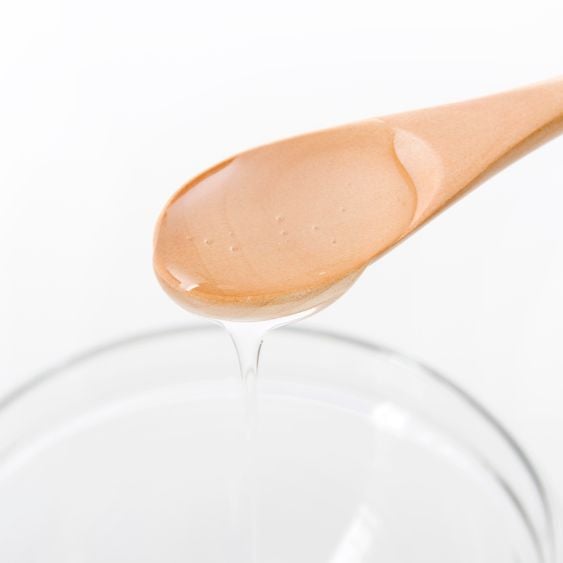
The MetaSweet® range carries ≥90% IMO on a dry basis and is roughly 60% as sweet as table sugar, with a mild, clean profile and no bitter aftertaste. It comes in four grades — syrup and powder, each in a standard grade and a High DP3 grade — letting formulators match both format and fiber level to the application. The syrups are clear, fully soluble liquids ideal for wet-process manufacturing; the powders suit dry blending and applications where solids are added directly.
The DP3 Distinction (and Why It Matters)
The single most useful technical fact about IMO is that its functional behaviour depends on degree of polymerisation (DP) — how many glucose units are chained together.
Shorter components, particularly panose and isomaltose, are readily broken down by the brush-border enzymes in the small intestine. Longer chains — DP3 and above — resist that digestion far better and are the fraction that behaves as fiber. This is well documented: in vitro and in vivo research shows that the lower-DP components of commercial IMO are largely digestible, while DP3-and-higher material is what survives to act as fermentable fiber.
That is exactly why the MetaSweet® range separates a standard grade (DP3 ≥60%) from a High DP3 grade (DP3 >90%). If your goal is maximum fiber functionality, the High DP3 grade delivers the highest tapioca-fiber percentage in the range. If you need sweetness and bulk with moderate fiber, the standard grade is the workhorse. Buying “IMO” without asking about DP profile is buying a black box — the DP distribution is what determines how the ingredient actually performs, and it is the first question any serious formulator should ask a supplier.
What the Science Supports — Stated Carefully
IMO is widely studied as a prebiotic candidate. Laboratory and animal studies report that higher-DP, higher-purity IMO resists digestion, reaches the colon, and can stimulate beneficial bacteria such as Bifidobacterium and Lactobacillus while producing short-chain fatty acids. A 2025 in vitro study found high-purity (>90%) IMO scored higher on a Prebiotic Index than both commercial IMO and FOS.
Two honest caveats belong in the same breath, and they are the reason this article exists:
First, prebiotic behaviour is conditional on the product. It depends on DP profile and purity. A low-DP, high-panose IMO will be mostly digested and reach the colon in far smaller amounts than a high-DP preparation. This is a category where “IMO” tells you less than the spec sheet does.
Second, regulatory status is not the same as scientific interest. In the United States, IMO is not currently classified as a dietary fiber by the FDA, which means it generally cannot be counted toward the Nutrition Facts fiber declaration in the US market. This is a key contrast with the resistant-dextrin fibers in our FiberWorks® range, which do carry FDA dietary-fiber recognition. Labelling and any fiber or prebiotic positioning must therefore be confirmed against the rules of the specific market where the finished product is sold.
In short: the science is genuinely promising, the effect is real but product-dependent, and the regulatory treatment varies by jurisdiction. We would rather give you that full picture than a one-word claim.
How IMO Performs in a Formulation
Beyond the fiber conversation, IMO earns its place on functional grounds that are not in regulatory dispute:
- Sugar reduction. At ~60% the sweetness of sucrose, it replaces sugar while contributing far less to the sugar profile, supporting sugar reduction and elimination.
- Bulking and body. It restores the bulk and mouthfeel lost when sugar or fat is removed from a formulation — one of the hardest things to replace in a reduced-sugar recipe.
- Binding. It works as a natural binder in bars, balls and pressed or formed products, holding a matrix together without traditional syrups.
- Heat stability and full solubility. It holds up through standard processing and baking and dissolves completely in water, suiting syrups, batters, fillings and beverages.
- Fiber enrichment and fat replacement. The High DP3 grades support an increased fiber profile and additionally function as a fat replacer in general-purpose applications.
How Much to Use
Dosage is always application-specific, but a few practical patterns help as a starting point. In bars, IMO is commonly used at meaningful inclusion levels to provide bulk and body to the matrix, often in the double digits as a percentage of the formula, depending on how much sugar is being replaced and how much binding the bar needs. In beverages and dairy, lower inclusion levels are typical, since the goal is usually fiber enrichment and mild sweetness rather than structural bulk. In confectionery and chocolate, IMO is dosed to replace sugar solids while maintaining the sweetness and texture profile.
Because the right level depends on the sugar you are removing, the texture target and the other ingredients in the system, the most reliable path is to start from a benchmark for your category and trial from there. Our technical team can provide a recommended starting inclusion rate for your specific application alongside a sample.
Application by Application
Protein and nutrition bars. IMO is a sugar replacer, binder and bulking agent in one, contributing fiber and body while holding the bar matrix together. This is one of its strongest use cases.
Baked goods. It adds fiber and texture to cookies, cakes and other baked products while reducing sugar, and its heat stability means it survives the bake.
Beverages. Fully soluble and non-cloudy, IMO enriches fiber and reduces sugar in drinks and premixes without affecting clarity or adding thickness.
Confectionery, chocolate and chocolate coating. IMO provides bulk, sweetness and texture in reduced-sugar confectionery, including chocolate and enrobing applications. For a closer look, see our guide to the role of MetaSweet® IMO in crafting chocolates.
Snacks. A clean-label sugar replacer and fiber source across general snack formats.
MetaSweet® IMO vs Other Sugar-Reduction Tools
No single ingredient solves sugar reduction alone, and IMO is often used alongside others. Compared with allulose (our HaloSweet® range), IMO brings soluble fiber and binding where allulose brings browning, bulk and a US “0g Added Sugars” advantage — the two are frequently complementary rather than competing. Compared with resistant dextrin (FiberWorks®), IMO offers a sweeter profile and binding character, while FiberWorks® carries FDA dietary-fiber recognition for US fiber claims. Choosing between them — or combining them — comes down to whether your priority is sweetness, binding, fiber labelling or texture, which is exactly the kind of trade-off our technical team helps formulators navigate.
Labelling
MetaSweet® IMO can be declared on the ingredient label as Isomalto-oligosaccharide (IMO) or Soluble fiber from tapioca starch, subject to local labelling rules. Because fiber classification and permitted descriptors differ by region, the correct declaration should always be confirmed for the specific market where the finished product is sold.
Frequently Asked Questions
Is MetaSweet® IMO a sugar or a fiber? It is both, in part. A portion behaves as soluble fiber (the digestion-resistant, higher-DP fraction) while a portion is digestible. The DP profile determines the balance, which is why grade selection matters.
Can I count IMO as dietary fiber on a US label? Generally no — IMO is not currently FDA-classified as a dietary fiber for Nutrition Facts purposes. If a countable US fiber claim is the goal, our FiberWorks® resistant-dextrin range is the better fit. Always confirm against current regulations for your market.
How sweet is it? Approximately 60% the sweetness of table sugar, with a clean profile and no bitter aftertaste.
What is the difference between standard and High DP3 grades? Both contain ≥90% IMO, but the standard grade has DP3 ≥60% while the High DP3 grade exceeds 90%, delivering more digestion-resistant, fiber-behaving material — the highest tapioca-fiber percentage in the range.
Is it heat stable for baking? Yes. MetaSweet® IMO is heat stable and remains functional through standard baking and processing conditions.
Is it suitable for vegan, gluten-free and allergen-sensitive products? Yes — it is made solely from tapioca starch, is plant-based, gluten-free, non-GMO and free from the major allergens.
The Bottom Line
IMO is one of the more misunderstood ingredients in the sugar-reduction space, largely because it is often discussed as if every IMO were identical. They are not — DP profile and purity drive both the functional and the fiber behaviour. MetaSweet® IMO is built around that reality, with grades that let you choose the DP level your application needs, backed by the documentation your regulatory team needs to label it correctly for each market.
To talk through which grade fits your formulation, or to request a sample and full documentation pack, contact our team.