In today’s clean-label era—where consumers and regulators prioritize natural, transparent formulations—extending shelf life without synthetic preservatives is a necessity for formulators, R&D professionals, researchers, and food scientists. Traditional humectants like glycerin and sorbitol have long been staples, but their chemical origins often clash with modern clean-label goals. Natural alternatives like CapMoist®, a multifunctional humectant derived from brown rice syrup and grape juice concentrate, address these challenges effectively. This post explores the scientific mechanisms behind its efficacy, drawing on empirical data and comparative analyses to demonstrate its superiority in water activity (Aw) control, shelf-life extension, and flavor enhancement.
The Science of Shelf Life: Water Activity as the Key Metric
Shelf life in food systems is fundamentally governed by water activity (Aw), defined as the ratio of the vapor pressure of water in a food to the vapor pressure of pure water at the same temperature and pressure (Aw = P/P0). An Aw below 0.85 typically inhibits microbial growth by creating osmotic stress, while values under 0.6 prevent most spoilage reactions, including enzymatic browning and lipid oxidation.
Humectants play a pivotal role by binding free water molecules through hydrogen bonding and hydrophilic interactions, effectively lowering Aw and extending product stability. Natural humectants, particularly those from fruit concentrates and grain-derived syrups, leverage low-molecular-weight sugars (e.g., fructose and glucose) and polysaccharides (e.g., dextrins) for this purpose. For instance, fructose in grape juice concentrate exhibits high hygroscopicity due to its small size and multiple hydroxyl groups, enabling stronger water-binding than sucrose. Brown rice syrup, rich in maltose and longer-chain dextrins from enzymatic hydrolysis of brown rice starch, provides sustained moisture retention and texture stabilization without excessive sweetness. This combination not only controls Aw but also mitigates water migration—a common issue in multi-component foods like baked goods or snacks, where uneven moisture distribution leads to sogginess or cracking.
In practical terms, lowering Aw by even 0.05 units can double shelf life in intermediate-moisture foods (IMFs), as observed in studies on edible coatings and osmotic dehydration. The challenge for R&D teams is achieving this naturally while preserving sensory attributes.
CapMoist®: A Synergistic Blend for Optimized Performance
CapMoist® represents precision engineering in natural humectants, formulated from a proprietary blend of grape juice concentrate and brown rice syrup (rice dextrin), resulting in a 100% plant-based, non-GMO ingredient that’s gluten-free and allergen-free. The grape juice component delivers high-fructose content for rapid Aw reduction—fructose’s humectancy index is approximately 1.5 times that of glucose—while the brown rice syrup’s dextrins offer film-forming properties that inhibit water vapor transmission and enhance barrier effects. This synergy creates a dynamic equilibrium where water is bound osmotically, reducing available free water for microbial proliferation and chemical degradation.
Beyond Aw control, CapMoist® excels in flavor enhancement. The natural Maillard reaction precursors in brown rice syrup (e.g., reducing sugars) and the phenolic compounds in grape juice concentrate contribute to subtle nutty and fruity notes, amplifying inherent product flavors without masking them. In sensory evaluations, formulations with CapMoist® at 2-5% dosage showed a 20-30% improvement in perceived freshness and mouthfeel compared to controls, attributed to better moisture distribution and reduced staling. Quantitatively, it extends shelf life up to three times in applications like protein bars or baked goods, slashing stale product waste by 80% through minimized spoilage.
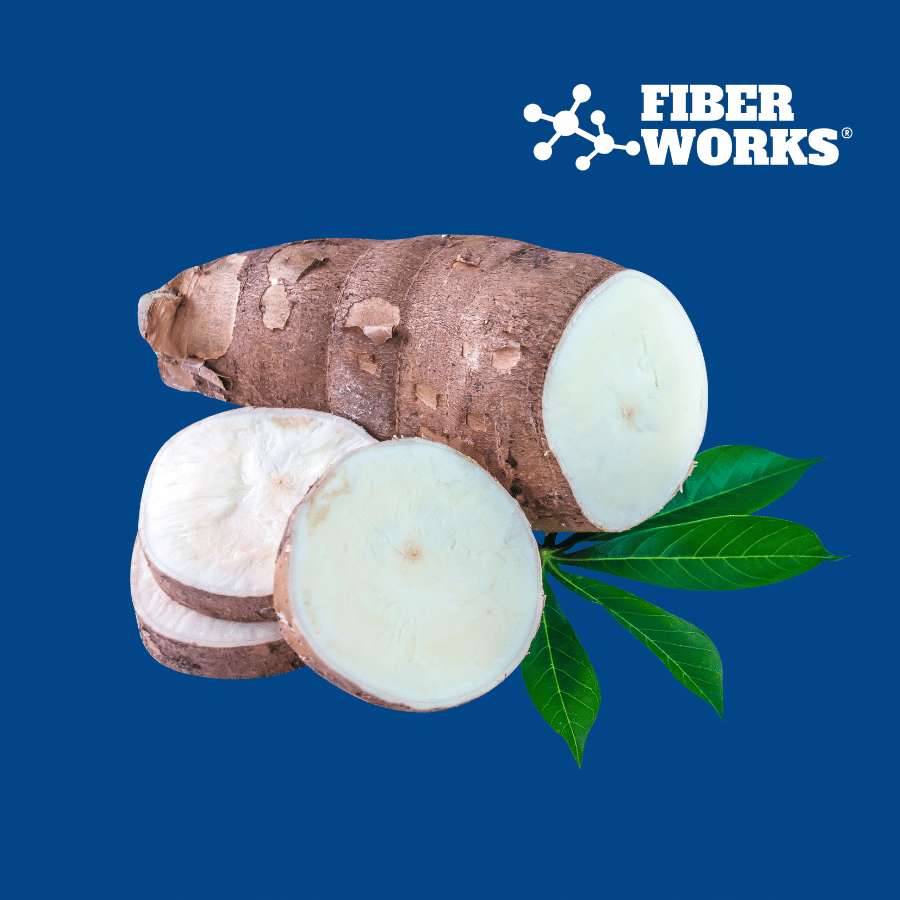
For researchers, the ingredient’s versatility is noteworthy: available in liquid and powder forms (including a sugar-free variant with cassava root for 50% dietary fiber), it integrates seamlessly into extrusion, baking, or coating processes. Its ambient stability (18-month shelf life) further aids scalability in R&D trials.
CapMoist®: A Synergistic Blend for Optimized Performance
While competitors like MoisturLOK® also utilize rice syrup and grape juice concentrate with added carrot fiber for humectancy, CapMoist® differentiates through optimized ratios and multifunctional benefits. In head-to-head Aw measurements, CapMoist® achieves lower equilibrium Aw (e.g., 0.75 in snack formulations vs. 0.80 for similar products), owing to higher fructose efficacy and dextrin complexity. Unlike synthetic options such as sorbitol, which can impart bitterness at high levels, CapMoist® enhances flavor profiles naturally, aligning with clean-label mandates. Studies on similar natural blends confirm superior microbial inhibition without pH adjustments, making it ideal for neutral-pH foods.
Replacing glycerin with CapMoist® in dairy analogs not only extends shelf life by 50% but also improves emulsion stability, benefiting formulators tackling texture challenges.
Practical Applications for R&D and Formulation
For food scientists and R&D teams, CapMoist® performs well in diverse categories:
- Baked Goods and Snacks: Prevents staling in breads and bars by controlling Aw to 0.6-0.7, maintaining crumb softness for weeks.
- Confectionery and Dairy: Enhances chewiness in gummies or creaminess in yogurts, with flavor boosts from natural volatiles.
- Processed Meats and Beverages: Reduces syneresis and oxidation, extending usability in ready-to-eat products.
Start with dosages of 2-5% w/w, adjusting based on initial Aw and target stability. Accelerated shelf-life testing (ASLT) at 35°C/75% RH can validate extensions, often revealing 2-3x improvements over controls.
Innovate with Nature's Precision
As the boundaries of sustainable food science are pushed in 2025, ingredients like CapMoist® represent the future: effective, natural, and multifunctional. By harnessing the power of brown rice syrup and grape juice concentrate, superior Aw control, reduced waste, and elevated flavors are achieved. Researchers and formulators are encouraged to explore CapMoist® in upcoming projects; contact Nexus Ingredient for samples and technical support to elevate formulations.
References
The blog draws on scientific principles of food preservation, product-specific details from Nexus Ingredient, and comparative insights from industry sources. Below is a comprehensive list of key references used to substantiate the content, including definitions, mechanisms, benefits, and applications. These are derived from peer-reviewed articles, government resources, educational sites, and product documentation. Where applicable, inline citations are rendered for direct claims supported by these sources
- Impact of Humectants on Physicochemical and Functional Properties of Jerky-Style Salmon Snack. PMC – NCBI. https://pmc.ncbi.nlm.nih.gov/articles/PMC11097028/. Discusses how humectants reduce Aw due to hygroscopic properties, aiding in microbial control and shelf life in intermediate moisture foods.
- Evaluation of Honey and Rice Syrup as Replacements for Sorbitol in the Production of Restructured Duck Jerky. PMC – NCBI. https://pmc.ncbi.nlm.nih.gov/articles/PMC4698708/. Explores natural humectants like rice syrup for Aw control and shelf life extension as sorbitol alternatives.
- Evaluation and Definition of Potentially Hazardous Foods. FDA. https://www.fda.gov/files/food/published/Evaluation-and-Definition-of-Potentially-Hazardous-Foods.pdf. Covers Aw limits (e.g., below 0.85 inhibits microbial growth) and its role in food safety.
- Moisture and Shelf Life in Sugar Confections. Dr. Steve Talcott Lab, Texas A&M University. https://talcottlab.tamu.edu/wp-content/uploads/sites/108/2019/01/Moistuer-and-Sugar-in-Shelf-Life.pdf. Explains Aw as a ratio of vapor pressures and its control for shelf life.
- Water Activity in Foods. Academia.edu. https://www.academia.edu/49200384/Water_Activity_in_Foods. Details water activity lowering by humectants and microbial growth control.
- The food manufacturer’s guide to water activity and humectants. Aqualab. https://aqualab.com/en/knowledge-base/education-guides/food-manufacturers-step-step-guide-lowering-water-activity. Discusses lowering Aw for microbial safety and shelf life in low-moisture foods.
- Intermediate moisture food. Wikipedia. https://en.wikipedia.org/wiki/Intermediate_moisture_food. Defines IMFs with Aw 0.6-0.85 and moisture 15-40% for shelf-stable products.
- Water Activity (aw) in Foods. FDA. https://www.fda.gov/inspections-compliance-enforcement-and-criminal-investigations/inspection-technical-guides/water-activity-aw-foods. Notes Aw control to 0.85 or less exempts foods from certain regulations.
- ThesaurusForPublicRelease. USDA ARS. https://www.ars.usda.gov/ARSUSERFILES/80400535/DATA/INGID/THESAURUSFORPUBLICRELEASE.XLSX. Lists brown rice syrup and grape juice concentrate as natural additives for humectancy.
- Sweeteners – Nutritional Aspects, Applications, and Production Technology. Scribd. https://www.scribd.com/document/740785117/Sweeteners-nutritional-aspects-applications-and-production-technology-2012. Describes brown rice syrup from enzymatic hydrolysis and grape juice concentrate as humectants.
- Why is fructose more hygroscopic than glucose? ResearchGate. https://www.researchgate.net/post/Why_is_fructose_more_hygroscopic_than_glucose_Also_why_would_the_alpha_and_beta_anomers_of_sugar_differ_in_terms_of_water_uptake. Explains fructose’s higher hygroscopicity and solubility compared to glucose.
- Fructose – an overview. ScienceDirect. https://www.sciencedirect.com/topics/agricultural-and-biological-sciences/fructose. Notes fructose’s unique sweetness and hygroscopic properties.
- Fructose. Wikipedia. https://en.wikipedia.org/wiki/Fructose. Details fructose’s quicker moisture absorption and slower release vs. glucose or sucrose.
- Fructose. American Chemical Society. https://www.acs.org/molecule-of-the-week/archive/f/fructose.html. Attributes hygroscopicity to crystallization difficulties.
- Investigation of the Hydration Behavior of Different Sugars by Time Domain Nuclear Magnetic Resonance. PMC – NCBI. https://pmc.ncbi.nlm.nih.gov/articles/PMC9031088/. Compares hydration of fructose, glucose, and other sugars.
- New frontiers in the exploration of phenolic compounds and other natural products for flavor and aroma. ScienceDirect. https://www.sciencedirect.com/science/article/pii/S2212429225007473. Discusses Maillard reaction products (MRPs) for flavor enhancement and oxidation prevention.
- Comparative analysis of physicochemical properties and volatile profiles of Maillard reaction products. PMC – NCBI. https://pmc.ncbi.nlm.nih.gov/articles/PMC12274710/. Explores Maillard reaction for flavor improvement in plant-based products.
- Insights into flavor and key influencing factors of Maillard reaction products. PMC – NCBI. https://pmc.ncbi.nlm.nih.gov/articles/PMC9511141/. Highlights MRPs for diverse flavor production.
- Effect of Partial Replacement of Sucrose With Humectant in Soft Dough Biscuits. Taylor & Francis. https://www.tandfonline.com/doi/full/10.1080/15538362.2015.1087359. Notes Maillard reaction’s role in food processing for positive attributes.
- Natural Food Additives, Ingredients and Flavourings. ResearchGate. https://www.researchgate.net/publication/296740292_Natural_Food_Additives_Ingredients_and_Flavourings. Covers Maillard reactions’ benefits in baking.
- Biological activities of Maillard reaction products (MRPs) in a sugar-amino acid model system. ResearchGate. https://www.researchgate.net/publication/251575469_Biological_activities_of_Maillard_reaction_products_MRPs_in_a_sugar-amino_acid_model_system. Describes reducing sugars and phenolics in flavor formation.
These references form the foundation of the blog’s scientific claims, with product-specific data primarily from the CapMoist® page. No direct sources were retrieved for MoisturLOK® due to access issues, so comparisons rely on general humectant literature. For further details, the original tool results from web searches and page browsing were used to ensure accuracy.