Introduction
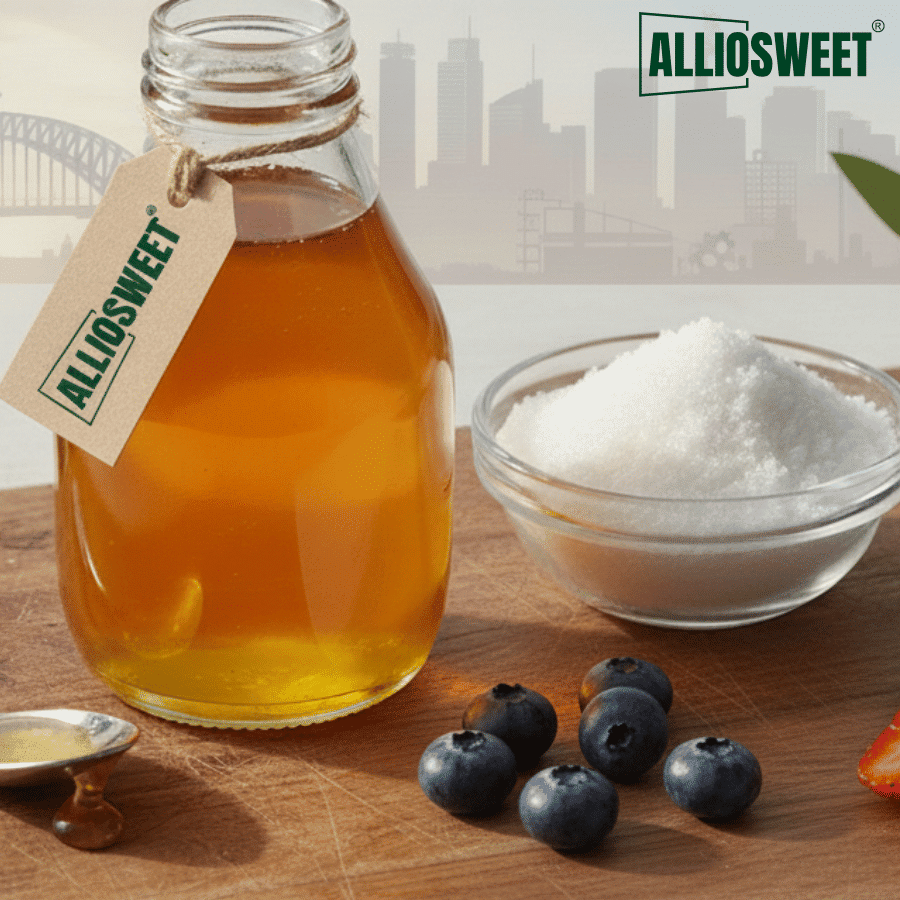
The global food industry is in the midst of a sugar reduction revolution, driven by consumer demand for healthier, low-sugar products. Australia is no exception – rising rates of obesity and diabetes have intensified calls for alternatives to refined sugar. Food manufacturers are seeking sweeteners that deliver sugar’s taste and functionality without the calories or glycemic impact. ALLIOSWEET® allulose, a novel “rare sugar,” emerges as a promising solution. Recently approved for use in Australia and New Zealand, allulose offers sugar-like sweetness with nearly zero calories, enabling the creation of indulgent products with dramatically reduced sugar content. This white paper provides a comprehensive overview of ALLIOSWEET® allulose for Australian food brands and contract manufacturers, covering its background, regulatory status, product offerings, functional benefits, application areas, formulation guidance, market opportunity, and why ALLIOSWEET® – by Nexus Ingredient – is the trusted choice for this innovative sweetener.
(All information is supported by current research and regulatory data, with references provided at the end of the paper.)
Allulose Background and Properties
What is Allulose? Allulose (scientific name D-psicose) is a monosaccharide sugar that naturally occurs in very small quantities in certain fruits (e.g. figs, raisins, jackfruit) and foods like caramel sauce and maple syrup. It is often called a “rare sugar” because it is present in nature only at trace levels. In structure, allulose is an epimer of fructose – it shares the same chemical formula as fructose but has a different arrangement of atoms. This slight structural difference means **allulose is absorbed by the body but not metabolized for energy, so it yields almost no calories.
Sweetness and Taste: Allulose provides approximately 70% of the sweetness of sucrose (table sugar). Importantly, its sensory profile is remarkably similar to sugar – it has the same clean, sweet taste with no bitterness or off-flavors, and a similar mouthfeel and texture. In taste tests, products sweetened with allulose have shown comparable consumer acceptance to those made with sucrose. This makes allulose extremely attractive as a sugar replacer, as it can mimic sugar’s eating experience more closely than high-intensity sweeteners (which often have aftertastes or require bulking agents).
Calories and Metabolism: Allulose is virtually calorie-free. It provides only 0.2–0.4 kcal per gram, about 90% fewer calories than sugar. Unlike sucrose (4 kcal/gram), allulose contributes a negligible amount of energy to the diet. The human body absorbs allulose in the small intestine but does not metabolize it into glucose for fuel. Instead, allulose is largely excreted unchanged. As a result, it does not raise blood glucose or insulin levels. This low-glycemic response makes allulose especially appealing for diabetic-friendly and keto formulations, or any product targeting blood sugar management. Studies have confirmed that allulose has no significant impact on blood sugar, earning it a glycemic index effectively near zero. Additionally, allulose does not promote tooth decay – unlike regular sugars, it is not fermentable by oral bacteria and thus does not contribute to dental caries.
Functional Characteristics: Beyond sweetness, allulose behaves very similarly to sucrose in many chemical and functional aspects:
- High Solubility: Allulose is highly soluble in water, dissolving readily even at ambient temperature. It can dissolve to over 65% concentration at 20 °C (approximately 290–320 grams in 100 mL of water) – a solubility on par with or greater than sucrose. This makes it easy to formulate into syrups, beverages, and confections without crystallization issues.
- Thermal Stability & Maillard Browning: As a reducing sugar, allulose undergoes Maillard reaction and caramelization when heated, similar to fructose or sucrose. When cooked or baked, allulose-containing formulations develop the golden-brown color and caramelized flavor expected from sugar. In fact, allulose starts to brown at a slightly lower temperature than sucrose, which can enhance the appearance and taste of baked goods. This property is a major advantage over some sugar alcohols (polyols) and high-intensity sweeteners, which do not brown or participate in Maillard reactions. (Manufacturers should monitor baking conditions, as allulose can brown faster than sugar.)
- Humectancy & Freezing Point Depression: Allulose has a strong affinity for water, acting as a humectant that helps retain moisture in products. Baked goods formulated with allulose tend to be softer and stay fresh longer due to this moisture retention. In frozen applications, allulose significantly depresses the freezing point of mixtures (because it is a monosaccharide). In fact, allulose’s effect on freezing point is roughly double that of sucrose on a weight basis. This means it can improve the scoopability of ice creams and frozen desserts, preventing them from becoming rock-hard at freezer temperatures. Ice creams made with allulose freeze softer and are more scoopable straight from the freezer, closely mimicking the functionality of sugar in frozen sweets.
- Fermentation Behavior: Allulose is not fermentable by typical yeast or bacteria, so it will not contribute to yeast-leavened fermentation or unwanted fermentation in products. For example, yeast cannot use allulose as a fermentable sugar for bread rising or alcohol production. This can be beneficial for reducing fermentable sugars in products like baked goods (to extend shelf life) or non-alcoholic drinks (preventing fermentation), though in applications like bread, a small amount of fermentable sugar may still be needed for yeast activity.
- No Cooling Effect: Unlike some sugar alcohols (e.g. erythritol), allulose does not exhibit a strong “cooling” sensation on the tongue. Its taste profile is very clean. In formulations, using allulose can help avoid the cooling effect and crystallization issues associated with erythritol. In fact, allulose is often used in synergy with erythritol or other sweeteners to balance out such sensory effects, as discussed later.
In summary, allulose offers an extraordinary combination of attributes: it tastes and functions like sugar in foods, yet contributes almost no calories and no glycemic load. These properties have led to allulose being hailed as a “holy grail” of sweeteners that can enable significant sugar and calorie reduction without sacrificing product quality.
Regulatory Status in Australia and New Zealand
Allulose is a recently approved novel food ingredient in Australia and New Zealand, marking a major milestone for sugar reduction innovation in the region. In late 2024, Food Standards Australia New Zealand (FSANZ) completed the assessment of D-allulose (Application A1247) and permitted its use as a novel food. As of Amendment No. 233 to the Food Standards Code (gazetted Oct 29, 2024), manufacturers in Australia and New Zealand are allowed to use allulose in a variety of foods, subject to certain maximum levels.
Approved Uses and Limits: FSANZ’s approval specifies the food categories and maximum permitted levels (MPLs) for allulose addition, to ensure safe intake. Key categories include:
- Beverages: Up to 3.5% w/w in non-alcoholic water-based flavored beverages (e.g. soft drinks, energy drinks). (Dairy-based drinks, fruit/vegetable juices and electrolyte drinks are excluded from this category.)
- Bakery Products: Up to 10% w/w in baked goods (breads, cakes, biscuits, etc.). Allulose’s browning and humectancy are especially useful here.
- Breakfast Cereals & Nutrition Bars: Up to 5% w/w in breakfast cereals and cereal/nutrition bars.
- Confectionery and Chewing Gum: Up to 50% w/w in chewing gum, and in confectionery (excluding chocolate). This high allowance reflects allulose’s role as a primary sugar replacer in candies and gums.
- Dairy and Desserts: Up to 5% in yogurt and 10% in other desserts (gelatin desserts, puddings). For ice cream and edible ices, up to 5% w/w is permitted, which supports sugar reduction in frozen treats.
- Sweet Sauces and Syrups: Up to 10% w/w in sweet sauces, toppings, and syrups. Similarly, up to 5% in salad dressings is allowed, useful for lowering sugars in condiments like sweet chili sauce or dressings.
- Tabletop Sweeteners: Allulose can be sold as a tabletop sweetener (packets or retail packs) at up to 100% purity, but must be labeled accordingly. Notably, a product composed solely of allulose can only be sold if designated as a tabletop sweetener (i.e. not as a general retail ingredient).
These levels were set based on safety and dietary exposure assessments. One consideration with allulose (as with many low-digestible sweeteners) is gastrointestinal tolerance – extremely high consumption can have a laxative effect in some individuals. To mitigate this, FSANZ requires an advisory statement on labels of certain foods containing allulose: “Excess consumption may have a laxative effect”. In practice, such a statement would be needed for products likely to lead to high intakes of allulose (e.g. sweets or gum with 50% allulose). The MPLs and typical serving sizes are set such that normal consumption should not cause issues for most people.
Nutrition Labeling in Australia: Under the FSANZ approval, allulose is treated uniquely in nutrition labeling. It was determined that D-allulose is excluded from the “sugars” declaration in the Nutrition Information Panel (NIP) because it is not metabolized like typical sugars. In other words, even though allulose is chemically a monosaccharide, the grams of allulose in a food do not count toward the “Total Sugars” on the label. This is significant: a product sweetened with allulose can claim a much lower sugar content on the label, aiding “no added sugar” or “reduced sugar” claims (provided other sugars are not present). Allulose is also excluded from the available carbohydrate count in the NIP in Australia/NZ, given its minimal energy contribution. Instead, allulose has been assigned a specific energy factor for calorie calculations: 2 kJ/gram (approximately 0.48 kcal/g). This allows manufacturers to accurately calculate and declare the reduced calories in allulose-sweetened foods. Importantly, in the ingredients list, allulose should be declared by name (e.g. “Allulose” or “D-allulose”) as an ingredient, just as one would list sugar.
The regulatory approval of allulose in Australia/New Zealand (effective 2024–2025) opens the door for local food companies to innovate with this ingredient. Prior to this, allulose was not permitted in the market, so its introduction is poised to be a “game-changer” for sugar reduction in countless product categories. Notably, the approval was driven by an application from Samyang Corp., a global supplier of allulose, and includes an initial period of exclusive use. Samyang, as the first to achieve Novel Food approval for allulose in ANZ, was granted exclusive supply rights for a period (to around late 2025/early 2026). After this exclusivity lapses (expected by February 2026), other suppliers and brands – such as Nexus Ingredient’s ALLIOSWEET® – are free to enter the market. This timeline means that by 2026, Australian manufacturers will have broader access to allulose sources and can confidently formulate with allulose under the established FSANZ guidelines.
Comparative Regulatory Insights – United States and Abroad
Allulose has already gained significant regulatory acceptance in other major markets, providing useful context for Australian manufacturers:
- United States: In the U.S., allulose is Generally Recognized as Safe (GRAS) and has been the subject of several GRAS notifications successfully reviewed by the FDA. Since 2019, the U.S. FDA has taken a favorable stance on allulose in nutrition labeling. Notably, the FDA issued guidance stating that allulose can be excluded from the “Total Sugars” and “Added Sugars” declaration on Nutrition Facts labels. This was a landmark decision – it’s the first time a sugar (chemically) is not counted as sugar on the label, due to its unique metabolic profile. American manufacturers can thus market products sweetened with allulose as having zero grams of added sugar, even if allulose is a primary sweetener. The FDA set a standard energy conversion factor of about 0.4 kcal/g for allulose in calorie calculations. In ingredient lists, it must be listed as “Allulose.” Allulose is already used in the U.S. in a range of reduced-sugar foods, from keto ice creams and protein bars to sweetened beverages. The U.S. experience has demonstrated allulose’s consumer acceptance and versatility, with products like a popular low-carb cereal achieving strong sales and positive feedback using allulose for sweetness. The regulatory flexibility in labeling has been a big driver of its adoption in the U.S.
- Asia (Japan, Korea): Japan was an early adopter; allulose (sometimes called psicose) has been used in Japan for years without special restrictions (it is not classified as a novel food there). South Korea approved allulose as a food ingredient and even allows it to be counted as zero calories on Korean labels. Both countries leverage allulose in products like snacks and beverages, valued for its sugar-like properties.
- Europe: As of this writing, allulose awaits approval in the EU. It’s under novel food consideration by EFSA (the European Food Safety Authority). The regulatory review is ongoing, but many expect a positive outcome given the safety data and approvals elsewhere. The timeline in Europe lags behind Australia’s, meaning Australian brands have an opportunity to get a head start in using allulose for exports or domestic market while EU approval is still pending.
In summary, the United States and several Asian countries have already embraced allulose, citing its safety and unique labeling advantages. Australia and New Zealand’s approval aligns with this global trend, positioning the region to capitalize on a proven ingredient. Australian manufacturers can be confident that the regulatory community (FDA, FSANZ, etc.) consider allulose safe for human consumption and a legitimate tool for sugar and calorie reduction.
ALLIOSWEET® Allulose Product Portfolio
Nexus Ingredient’s ALLIOSWEET® line offers allulose in multiple forms to suit different manufacturing needs. ALLIOSWEET® allulose is produced through a natural enzymatic conversion of plant sugars, yielding high-purity D-allulose that meets rigorous quality standards (Halal, Kosher, non-GMO, etc.). Each format is designed for easy integration into formulations, whether you’re replacing table sugar or corn syrup. The product offerings include:
- ALLIOSWEET® Allulose – Crystalline Powder: A white, crystalline allulose powder with >99% purity. This form looks and handles much like regular sugar, making it ideal for dry mix applications, baking, and confectionery. The powder dissolves quickly into liquids and provides bulk and texture in recipes. Use the crystalline form to replace granulated sugar in everything from cake batter to spice blends. It comes in 25 kg bags for industrial use. The powder form is especially useful in baked goods, dry drink mixes, chocolates (sugar-free chocolate coatings), and in table-top sweetener blends. It provides the full functionality of solid sugar – including binding and browning – with a fraction of the calories.
- ALLIOSWEET® Allulose – Syrup: A viscous syrup form of allulose (approximately 70% solids solution) that can substitute for liquid sweeteners like corn syrup, honey, or invert sugar. The syrup form is convenient for beverages, sauces, syrups, and bar formulations, where a liquid sweetener is needed for easy blending. It has high purity allulose dissolved in water, with a sweetness about 70% that of an equivalent sugar syrup. ALLIOSWEET® syrup is colorless and clean-tasting, and it resists crystallization thanks to allulose’s high solubility. Typical packaging includes 20 kg pails or 1,300 kg IBC totes for bulk handling. The syrup can improve humectancy and shelf life in products like bakery fillings, ice cream ripple sauces, and chewy granola or protein bars (where it acts as a binder while cutting sugars and calories).
- ALLIOSWEET® Stevia Blend: For manufacturers seeking a one-to-one sugar replacement in sweetness, Nexus offers a custom blend of allulose with a high-purity stevia extract. This blend leverages allulose as the bulk sweetener and stevia’s intense sweetness to achieve sugar-equivalent sweetening power. Allulose at 70% sweetness is boosted to 100% (or higher) sweetness by a touch of stevia – all while keeping the solution natural and very low-calorie. The synergy is powerful: allulose masks stevia’s aftertaste and provides sugar’s mouthfeel, while stevia compensates for allulose’s lower sweetness. The result is a natural sweetener blend that can replace sugar one-for-one in sweetness in formulations, with ~90% fewer calories. This blend is ideal for tabletop sweeteners, baking mixes, or beverages where a full sugar replacement is desired without adjusting the recipe for less sweetness. It is a clean-label solution (all components from natural sources) that can appear simply as “sweetener (allulose, stevia extract)” on ingredient lists. Nexus can adjust the stevia level to customer requirements, and the blend is offered in convenient granular or powdered form for easy dosing.
- ALLIOSWEET® Monk Fruit Blend: Similar to the stevia blend, this version pairs allulose with monk fruit extract (luo han guo), another plant-derived high-intensity sweetener. Monk fruit extract provides a clean sweetness with no calories, and when combined with allulose, it yields a well-rounded sugar-like taste. Some brands prefer monk fruit’s flavor profile or its marketing appeal as a traditional fruit sweetener. The ALLIOSWEET® Monk Fruit Blend allows for 1:1 sugar replacement in sweetness and functionality: allulose contributes bulk, browning, and mouthfeel; monk fruit contributes the extra sweetness needed to match sugar’s level. The blend is suitable for diabetics and keto diets, as it has negligible glycemic impact. It can be used in beverages, cereals, yogurt, confections, and more. By using monk fruit (which is heat-stable) together with allulose, manufacturers can create 100% natural, sugar-free products without the laxative polyols or artificial sweeteners. This blend, too, can be customized in sweetness to meet specific formulation targets.
- ALLIOSWEET® Custom Solutions: Nexus Ingredient recognizes that each application may have unique requirements. We offer custom allulose-based sweetening solutions tailored to your project. This could include bespoke blends (for example, allulose combined with dietary fibers, other sugar alcohols, or even minor amounts of sucrose) to achieve the perfect sweetness, bulking, and textural qualities. Nexus can also adjust granulation, particle size, or syrup viscosity to suit specific processes (e.g. high-speed beverage manufacturing or chocolate panning). Our technical team can advise on the optimal use level of allulose in your recipe and suggest complementary ingredients (such as our FiberWorks® soluble fiber or MoistPlus® humectants) to replace all of sugar’s functionality. Whether you need a high-potency sweetening system for a zero-sugar soda, a bulked blend for a sugar-free baking mix, or an allulose-fiber binder syrup for chewy bars, ALLIOSWEET® can be formulated to deliver. These custom solutions ensure that manufacturers get a turn-key sugar-replacement system that minimizes development time and maximizes product success.
All ALLIOSWEET® allulose products are produced under strict quality and food safety certifications (HACCP, BRC), and are Non-GMO, gluten-free, allergen-free, Halal and Kosher certified. Nexus Ingredient sources allulose through reliable production partnerships and maintains inventory in Australia to ensure consistent supply for our clients. In the next sections, we delve into how allulose benefits various food and beverage applications and provide guidance on formulating with this ingredient.
Functional Benefits of Allulose in Food & Beverage Applications
The true power of allulose is revealed when it is applied in real food formulations. Unlike many sugar substitutes that only provide sweetness (often with drawbacks), allulose contributes multiple functional benefits that closely emulate sugar’s role. Below we detail several key benefits and functionalities of allulose in applications:
Significant Calorie Reduction
Replacing sugar with allulose enables dramatic calorie reductions without sacrificing sweetness. Gram for gram, allulose has about 90% fewer calories than sucrose. At 0.4 kcal/gram (or lower in some regulatory contexts), it is considered a low-calorie sweetener. This means formulators can slash calories in products like beverages, desserts, and cereals while maintaining a satisfying sweetness. For example, a serving of yogurt or ice cream sweetened with allulose can have dozens fewer calories than if it were sweetened with sugar. Because allulose’s functional bulk replaces sugar, calorie savings are straightforward and do not require adding other caloric fillers. The use of allulose thus directly supports development of lower-calorie, diet-friendly products – an attractive benefit in an era where consumers carefully watch caloric intake and seek healthier indulgences.
No Added Sugar & Low Glycemic Index
Allulose allows manufacturers to create products with “No Added Sugar” claims that still taste sweet and enjoyable. Since allulose isn’t counted as sugar on labels in Australia and the U.S., products can achieve very low sugar totals. This is crucial for companies looking to meet the growing demand for no-sugar-added foods and beverages. Additionally, because allulose doesn’t raise blood glucose or insulin, the glycemic index (GI) of allulose is effectively zero. Diabetic or pre-diabetic consumers can ingest allulose-sweetened foods with minimal impact on their blood sugar levels. This makes allulose-sweetened products suitable for diabetes management and keto diets. Unlike high-GI sugars and syrups that cause spikes and crashes, allulose provides sweetness without the metabolic consequences. The ability to reduce “added sugars” to nil on the nutrition panel (while keeping carbs net available very low) could also help products avoid sugar taxes or front-of-pack warning labels in jurisdictions with such regulations. In short, allulose opens opportunities for better-for-you products that still deliver sweetness – such as diabetic-friendly ice creams, keto snacks, and sugar-free drinks – with labeling that clearly reflects their health advantage.
Sugar-Like Sweetness and Flavor Profile
In terms of taste, allulose is one of the most sugar-like alternative sweeteners available. Its sweetness is often described as “clean and identical to sugar’s”, just slightly less intense. At ~70% the sweetness of sucrose, it can be used at higher concentration or paired with a high-intensity sweetener to reach the desired sweetness level. Importantly, allulose has no bitter or off-taste and no cooling effect, distinguishing it from many alternatives like stevia (which can be bitter) or erythritol (which has a cooling sensation). This makes formulating easier – often no masking agents or flavor modifiers are needed to cover up the sweetener, because allulose’s flavor is so close to sugar. It also means the intrinsic flavors of the food are unmuted by the sweetener. For example, a strawberry flavor in a beverage will shine through, because allulose’s sweetness doesn’t distort the flavor profile (whereas high-potency sweeteners sometimes have delayed sweetness or lingering aftertaste that can change the flavor perception). Allulose can also enhance certain flavor development through caramelization, contributing subtle brown sugar or toasted notes when heated that can round out the flavor of baked goods or confections. Overall, allulose provides a pleasant, sucrose-like sweetness that consumers enjoy, enabling delicious end-products even at high levels of sugar reduction.
Maillard Reaction & Caramelization (Browning and Flavor)
A standout functional property of allulose is its ability to participate in the Maillard reaction (the browning reaction between sugars and proteins/amino acids) during cooking and baking. Many sugar replacers (like sucralose, stevia, or some polyols) do not brown at all, which can lead to pale, unappetizing baked goods or toasted products. Allulose, by contrast, browns similarly to sucrose and even more readily in some cases. It produces the desirable golden-brown crust color on baked goods such as cookies, cakes, and breads. This browning is not just aesthetic – the Maillard reaction also generates complex flavor compounds that contribute to the rich, toasty, or caramel-like flavors in baked and fried foods. Allulose’s caramelization under heat yields a flavor profile comparable to sugar’s in applications like caramel sauces, toffees, and roasted cereals. For instance, graham crackers or brown bread made with allulose can develop the same color and satisfying baked notes as their full-sugar counterparts. In confections like caramel or brittle, allulose can melt and brown, imparting a traditional cooked-sugar flavor. This is a major functional advantage for allulose: it ensures that reduced-sugar recipes still look and taste appealing, with proper browning, crust formation, and aroma. Manufacturers should note that because allulose browns slightly faster, baking temperatures or times might be adjusted to prevent over-browning in some cases – a small formulation tweak to gain sugar-like coloration. Additionally, care should be taken in high-protein products (like high-protein bars) since allulose’s Maillard activity could lead to stronger browning with proteins present; using buffering or lower baking temps can manage this. Overall, allulose brings back the “browning factor” that is lost with many other sugar alternatives.
Bulk and Texture Contribution
Sugar plays a critical role as a bulking agent in recipes – it adds solids, contributes to mouthfeel, and influences texture (providing viscosity in liquids, tenderness in baked goods, chewiness in confections, etc.). Allulose is a full-bulk sweetener (unlike ultra-sweet additives that are used in tiny amounts) and thus can replace sugar’s bulk in formulations nearly one-to-one. This means that when you substitute allulose for sugar, the recipe’s mass and solids content remain similar, which helps maintain textural properties. For example, in cookies, allulose provides spread and some structure; in cakes, it contributes to batter viscosity and crumb tenderness. Though allulose is slightly less sweet, it can be used at slightly higher dosage to make up sweetness or combined with a high-intensity sweetener, while still providing bulk. This can eliminate the need for additional bulking agents (like maltodextrin or fibers) that are often required when using stevia or sucralose alone. Moreover, allulose’s high solubility means it can contribute to the body and mouthfeel of beverages by adding soluble solids, similar to how sugar adds mouthfeel to soft drinks or juices. In dairy products, the dissolved solids from allulose can improve the richness perception. Allulose solutions have a viscosity close to that of sugar syrups, which is beneficial in products like sauces or toppings. Additionally, allulose can help with freezing point depression in frozen desserts due to the dissolved solids, as noted earlier, which translates to a smoother, creamier texture in ice creams (preventing large ice crystal formation). In summary, allulose is not just a sweetener but also a functional bulking ingredient that can maintain or improve texture and body in reduced-sugar formulations.
Moisture Retention and Softness
Foods formulated with allulose often benefit from improved moisture retention. Allulose is hygroscopic and holds onto water molecules, acting as a humectant. This can help keep baked goods soft and moist over shelf life. For instance, a muffin or cake made with allulose is less prone to drying out or staling quickly, as the allulose in the crumb retains moisture. Similarly, soft cookies or brownies remain chewy and tender longer. This humectancy can also reduce crystallization in products like frostings or syrups, keeping them smooth. In high-protein or high-fiber bars, which can otherwise harden over time, allulose can help maintain a softer texture by binding water. The result is often extended freshness and a better eating quality throughout the product’s life. Manufacturers have reported that combining allulose with certain soluble fibers (like glycerol, sorbitol, or fiber syrups) can further amplify this softness and prevent bar hardening – making allulose especially useful in nutrition bars and bakery products where texture is key. It’s worth noting that in some very humidity-sensitive applications (like hard candies or crunchy cookies), formulating with allulose may require moisture control in packaging, given its hygroscopic nature – but generally this is manageable with standard packaging solutions.
Synergy with Other Sweeteners
Allulose plays well with others. Its use in combination with high-intensity sweeteners or other polyols can actually yield a better result than any one sweetener alone. We’ve already discussed how stevia or monk fruit extracts can be paired with allulose to reach 100% sweetness; the presence of allulose often improves the taste profile of these intense sweeteners, mitigating any lingering bitterness by providing a sugar-like baseline. Allulose also shows synergy with erythritol, a zero-calorie sugar alcohol often used in keto products. Erythritol provides cooling, which can mask some bitter notes, whereas allulose provides browning and moisture – together they enable deeper sugar reductions with improved taste/texture compared to using erythritol or allulose alone. By splitting the sweetener load between two bulk alternatives, formulators can also stay within any usage limit for each (for instance, keeping allulose and erythritol each below levels that might cause GI discomfort, yet achieving a large total sugar reduction combined). In bakery applications, allulose + erythritol + a pinch of stevia has been a winning combo: erythritol and allulose together give a more rounded sweetness and better baked structure, and the slight sweetness deficit can be topped up by stevia, yielding sugar-like sweetness with no added sugar declared. The synergy extends to flavor too – because allulose lacks the cooling of erythritol, using them together lessens that cooling effect in the final product, resulting in a more neutral taste. The bottom line is that allulose is a versatile team player in the sweetener toolkit. It can be the star in a formulation or part of a blend, greatly enhancing the overall sweetness profile, stability, and functionality of sugar-reduced recipes. This flexibility allows food developers to tailor sweetness systems that best fit their product’s needs.
Application Areas and Use Cases
Allulose’s multifaceted benefits make it suitable for a broad array of food and beverage applications. Below we outline key application categories and how allulose adds value in each:
- 🌾 Bakery Products: Allulose shines in baked goods like breads, cakes, muffins, cookies, pastries, and biscuits. It can replace a significant portion of sugar in sweet baked items, delivering browning, moisture, and tenderness. For example, in cookies and brownies, allulose contributes to a golden-brown crust and chewy texture (due to its humectancy). In cakes and muffins, it helps retain moisture for a soft crumb and extends shelf life by delaying staling. Allulose does not feed yeast, so in yeast-leavened dough (breads, buns) a small amount of fermentable sugar might be retained for yeast activity; however, allulose can replace non-fermentable sugar portions and add sweetness to dough without causing excess browning of bread crust. With allulose, bakers can create lower-sugar, lower-calorie pastries and breads that still look, bake, and taste like traditional recipes. Up to 10% of allulose is permitted in bakery formulations in ANZ, which enables substantial sugar reduction in products like breakfast muffins, cookies, and flatbreads. Allulose is also useful in gluten-free baking, where it can improve Maillard browning and moisture retention, compensating for some quality differences in gluten-free dough.
- 🥤 Beverages: Allulose is highly suited for beverages and drink mixes, including flavored waters, soft drinks, juices, energy drinks, smoothies, and powdered drink blends. Because it dissolves completely and is stable in solution, allulose can be used to sweeten beverages much like simple syrup or HFCS, but with negligible calories. It provides the mouthfeel that sugar normally would, giving a satisfying body to diet drinks that is often missing with high-intensity sweeteners alone. Allulose is stable over typical beverage pH ranges and pasteurization conditions – it does not hydrolyze or lose sweetness under moderate heat. Clear beverages remain clear, as allulose is colorless and does not precipitate. Manufacturers have started using allulose in low-calorie sodas, iced teas, sports drinks, and flavored milks to achieve a true sugar-like taste without adding sugars on the label. For instance, a lemonade can be sweetened with allulose to deliver the indulgent sweetness of a full-sugar lemonade but with near-zero sugar and calories. Because FSANZ permits ~3.5% allulose in non-alcoholic drinks, one can get a significant sweetness contribution (approximately equivalent to 2.5% sugar in sweetness) which, combined with a touch of stevia or sucralose, can yield a fully sugar-free beverage. Allulose is also useful in syrups and concentrates (like coffee syrups or fruit concentrates) – it provides thickness and sweetness similarly to sugar, allowing companies to offer sugar-free syrup options for coffees and cocktails that taste authentic.
- 🍭 Confectionery & Sweets: Allulose is a game-changer in confections, candies, and sweet snacks. It can replace sugar in products such as gummies, hard candies, caramels, chewable candies, fondants, marshmallows, and more. With up to 50% allowed in confectionery (non-chocolate), many sugar-free or reduced-sugar candies can be formulated primarily with allulose. In chewing gum, which can also use up to 50% allulose, allulose can serve as a soluble bulk sweetener that keeps gum formulas sugar-free. Because allulose crystallizes differently than sucrose, some candies (e.g. chewy caramels, nougats) may actually have improved texture – less graining and a softer bite – when using allulose. The Maillard reaction capability is particularly useful for caramels and toffee: allulose browns and gives a real caramel flavor when heated, enabling sugar-free caramel sauces or brittle that taste very close to traditional ones. Allulose’s high solubility also allows making high-“Brix” syrups for gummy candy or jelly candies that set properly but with far less sugar content. In chocolate, allulose is not yet widely used (and note that FSANZ did not include chocolate in the initial confectionery approval), partly due to some challenges in cocoa butter systems – however, researchers are exploring its use in chocolate as well, often in combination with erythritol and fibers. Overall, allulose can help confectionery makers create tooth-friendly sweets (since it doesn’t cause cavities) that are lower in calories. Early commercial examples in the U.S. include allulose-sweetened gummy bears, syrup toppings, and even rare-sugar candy bars.
- 🥛 Dairy Products & Alternatives: Allulose is beneficial in dairy applications like yogurt, flavored milk, dairy desserts, ice cream, and in non-dairy analogues (plant-based milks, yogurts, etc.). In yogurt and fermented dairy, allulose provides sweetness without fermentability – yogurt cultures cannot metabolize allulose well, so it sweetens the yogurt without increasing lactic acid production. This means you can have a sweet-tasting yogurt with less sugar and tartness development. Up to 5% allulose is allowed in yogurt in ANZ, which can replace a large portion of the sucrose or fructose typically used in fruit yogurts. Consumers get a lower-sugar yogurt that still has the desired sweetness and flavor. In ice creams and frozen dairy, allulose truly excels: it depresses freezing point significantly, contributing to a smoother, softer ice cream that remains scoopable at low temperature. Allulose also doesn’t cause the cooling effect that erythritol does, so the flavor of the ice cream is cleaner. Many next-generation “keto” ice creams and dairy desserts in North America use allulose to achieve a creamy, non-icy texture with very little sugar. Beyond sweetness, allulose can improve the custard and Maillard notes in heated dairy desserts (for example, a baked custard or a dulce de leche analog made with allulose can brown and thicken similarly to the sugar-made version). In plant-based milks or protein shakes, allulose can add back the body and sweetness that might be missing when skipping sugar. It also works in coffee creamers and flavored creams, offering sweetness without adding sugars that could promote spoilage. For cheese-based desserts or sweet cheeses (like a low-sugar cheesecake or cream cheese spread), allulose again can sweeten without fermenting, preserving the stability of the product.
- 🍨 Frozen Desserts & Edible Ices: In addition to ice cream, sorbets, popsicles, slushes, and other frozen treats benefit from allulose. A sorbet or fruit ice made with allulose will have a softer freeze point and smoother mouthfeel, often allowing a very low sugar content while still scooping nicely. Since allulose depresses freezing point more than sucrose on an equal weight basis, formulating with allulose may require slightly less total sweetener solids to achieve the same softness – enabling even more calorie reduction. For example, a raspberry sorbet could be made with allulose and a bit of fruit sugar, yielding a product with perhaps half the calories and sugars of a standard sorbet but with a very similar texture and scoopability. Frozen pops can likewise be made without worry of them turning rock-hard; allulose keeps them bite-able straight from the freezer. Importantly, because allulose has synergy with other polyols, some commercial formulations combine allulose with glycerol or sorbitol to optimize freezing properties for low-sugar ice creams – delivering a product that mimics full-sugar ice cream in creaminess and hardness, yet drastically cuts sugar. The consumer appeal of such products is high, as they no longer have to compromise on texture when choosing a sugar-free frozen dessert.
- 🍫 Nutrition Bars and Cereals: Allulose is making waves in the nutritional/snack bar category (protein bars, fiber bars, granola bars) and in breakfast cereals and granolas. In bars, allulose syrup can replace corn syrup or other binders to glue the ingredients together, providing sweetness and moisture without the high sugar content. It helps keep bars soft and chewy, preventing them from hardening over time (a common issue in high-protein bars) due to its water-binding ability. Moreover, since it’s not fully metabolized, the “net carb” count of bars stays low – a big plus for keto or low-carb positioning. Many leading protein bar brands in the U.S. have switched to allulose for these reasons, allowing >50% sugar reduction in some cases while improving taste. For example, an oatmeal protein bar can use allulose syrup in place of brown rice syrup, cutting out a lot of sugar while keeping the bar moist and sweet. In breakfast cereals, especially those targeting kids or keto consumers, allulose can be used to coat flakes or puffs, giving them a sweet taste and crunchy texture (allulose can crystallize into a fine coating that adds crunch, similar to sugar). Since cereals have a relatively low added sugar allowance under FSANZ (5% max), allulose is valuable – with its 70% sweetness, that 5% inclusion can go a long way to sweeten a cereal without contributing to much sugar on the label. Additionally, the browning effect helps in extruded cereals or baked granola to get a desirable toasted appearance and flavor that would otherwise be missing in a sugar-free recipe. Imagine a “zero added sugar” granola that still has clusters with a golden glaze and satisfying sweetness – allulose makes that possible.
- 🍜 Sauces, Syrups & Condiments: Reducing sugar in sauces and syrups is tricky because sugar often provides thickness, shine, and preservation. Allulose offers an elegant solution. In products like chocolate syrup, fruit syrup, pancake syrup, or dessert toppings, allulose can provide the viscosity and sheen of a sugar syrup. It resists crystallization better than sucrose, so syrups remain smooth. A chocolate sauce made with allulose will have the same rich sweetness and thickness but significantly less sugar – and it won’t crystallize in the fridge as quickly as a sucrose-based sauce. For savory sauces like barbecue sauce, ketchup, or sweet chili sauce, allulose can replace sugar or corn syrup to greatly cut down added sugars. It contributes to the caramelized flavor development during cooking of such sauces (for example, helping a sugar-free BBQ sauce still achieve that sticky, caramelized glaze on meat when grilled). Allulose is stable in the acidic conditions of ketchup or vinaigrettes, so it won’t break down. Up to 10% is allowed in sweet sauce applications, which is ample for most recipes. In salad dressings, where typically a few percent of sugar is used to balance flavor, allulose can do the job with negligible calorie impact, and as a bonus, it doesn’t ferment – so dressings are less prone to spoilage by yeasts. Allulose also works well in marinades and glazes, as it will brown on the surface of meats or vegetables similarly to sugar, aiding in color and flavor without causing charring as quickly (it seems to brown at lower temps but not burn as fast at high heat). From ice cream sundaes (sugar-free chocolate fudge sauce!) to morning pancakes (low-sugar maple-style syrup!), allulose broadens the possibilities for indulgent sauces that align with sugar-reduction goals.
- Other Uses: Beyond the major categories above, allulose has potential in countless other applications. In tabletop sweeteners, crystalline allulose or allulose blends can be packaged in sachets or jars as a spoon-for-spoon sugar replacement for consumers (e.g. sweetening coffee, sprinkling on grapefruit). In reduced-sugar jams and fruit spreads (where up to 10% is allowed), allulose can replace sucrose to cut the added sugar content dramatically, although pectin gelation may need adjustment for the different sugar functionality. In fermented foods and beverages (like kombucha, kefir, brewing), allulose could sweeten the product without being fully fermented by the culture, allowing control over the final sugar content. And in pharmaceutical or nutraceutical products (like syrups or chewable supplements), allulose offers a non-cariogenic sweetener option that is easy on blood sugar. The possibilities continue to grow as product developers explore this novel sweetener’s capabilities.
Formulation and Technical Guidance for Using Allulose
Formulating with allulose is generally straightforward, but there are important considerations to ensure success. Here we provide technical guidance and best practices for incorporating ALLIOSWEET® allulose into your products:
- Sweetness Adjustment and Blending: Remember that allulose is ~70% as sweet as sugar. In many cases, you will pair allulose with a high-intensity sweetener (like stevia, monk fruit, sucralose, etc.) or use slightly more allulose to reach your target sweetness. Using Allulose Alone: If you use only allulose, you may need ~1.3 grams of allulose to replace the sweetness of 1 gram of sugar. However, adding such extra solids could affect texture or exceed regulatory use limits in some foods. A more efficient approach is to use allulose for bulk and add a minor amount of intense sweetener to make up the sweetness gap. For example, a chocolate chip cookie could replace all its 30g of sugar with ~30g allulose plus a very small amount of stevia extract to provide the remaining sweetness. ALLIOSWEET® blends (stevia or monk fruit) conveniently address this by pre-balancing the sweetness – if you use those, no further high-intensity sweetener addition is needed. It’s also worth noting that allulose’s perceived sweetness can exhibit synergy with certain sweeteners – research and industry experience have shown that blending allulose with a sweetener like sucralose or stevia can sometimes yield a sweetness that is more than additive (a phenomenon of sweetness synergy). Thus, formulating blends can reduce the total sweetener needed while achieving a clean taste. We recommend bench trials to fine-tune the ratio, as each application’s flavor matrix may influence sweetness perception differently.
- Usage Levels and Regulatory Limits: Be mindful of the FSANZ MPLs for allulose in various food classes (detailed in the Regulatory section above). These limits should not be exceeded in product formulations intended for ANZ. In practice, the limits are fairly generous for most applications. For instance, 10% in bakery is usually enough to replace at least half or more of the sugar in many baked goods. If a formulation requires exceeding these levels to hit a sweetness or functional target, consider pairing allulose with another sweetener so that each is below its limit. Additionally, consider serving sizes – FSANZ and other authorities suggest that consuming more than about 0.5 g of allulose per kg body weight in one sitting may cause gastrointestinal discomfort in some individuals. For an average adult (~70 kg), that’s about 35 g of allulose. Most single servings of foods will contain far less, but if you anticipate someone might binge eat multiple servings (e.g. confections), it’s wise to either keep per-serving allulose moderate or include the “excess consumption” laxative warning on the label as required. Gradual introduction of allulose in the diet tends to increase tolerance over time (similar to polyols), but caution for very high doses is prudent.
- Browning and Baking Considerations: As noted, allulose-containing doughs and batters will brown faster. Oven temperature and time might need slight adjustments. If you find your product is over-browning or getting too dark externally before the interior is cooked, try lowering the bake temperature by ~10–15 °C and baking a bit longer. Alternatively, reduce other reducing sugars or browning agents in the formula (for example, if you also use malt, honey, or certain proteins). In extrusion or frying processes, monitor color development; you may reach desired color sooner. On the flip side, if you want more browning, a small amount of protein (milk or egg) in a recipe together with allulose can enhance Maillard browning. Acrylamide: One note – studies (e.g. on allulose vs. sucrose in baked goods) have shown allulose can lead to slightly higher acrylamide formation due to its high reactivity in Maillard reaction. To mitigate this, manufacturers can consider adding antioxidants or using asparaginase enzyme in recipes like cookies that are prone to acrylamide, or simply bake at a bit lower temperature. These are similar strategies as used for normal high-sugar recipes, just something to be aware of with allulose’s enthusiasm for browning.
- Hydroscopicity and Storage: Crystalline allulose is reported to have relatively low hygroscopicity as a powder (it doesn’t clump quickly at moderate humidity), which is good for shelf stability of the pure ingredient. However, in finished products, allulose’s humectant nature means it will attract moisture from the environment. Packaging: Ensure that products that need to stay dry and crisp (like a biscuit or dry cereal) are packaged in moisture-proof packaging to prevent softening, as the allulose may draw moisture in humid conditions. Conversely, products meant to stay soft (like muffins) will benefit from this and remain moist. In confections, if making something like a hard candy with allulose, you’ll need to store it with proper sealing and perhaps include a drying agent in the container to avoid the candy getting sticky (since allulose can absorb moisture). Overall, standard good packaging practices (airtight, sometimes nitrogen flush, etc.) will preserve allulose-sweetened products effectively.
- Solubility and Crystallization: Allulose’s high solubility means you can create high-solid syrups. For example, at 25 °C you can dissolve over 60–70% allulose by weight, and at higher temperatures nearly 100% (a saturated solution). This is great for making confections or syrups, but also note that if you supersaturate a solution and then cool it, crystallization can occur slowly over time (just like a sugar syrup can crystallize). If crystallization is undesirable (e.g. in a smooth syrup or fondant), consider using a mixed syrup (allulose with a bit of glycerol, sorbitol or dextrose, etc.) to disrupt crystallization, or ensure the syrup is stored above any critical crystallization temperature. For frozen products, high solubility means it’s easy to incorporate, but you might actually have to reduce other solids to avoid too low a freezing point (some formulators replace not all the sugar with allulose in ice cream, keeping a little sucrose or adding poly-dextrose to balance the freezing point). If clarity is needed (like a clear beverage or gel), allulose will stay dissolved and clear. In jams or jellies, it won’t crystallize out like sucrose can, but you might need more pectin or gums because allulose doesn’t provide the same set as sucrose in some gelling systems – testing is advised.
- Fermentation and Preservation: As mentioned, allulose is not fermentable by common food microbes. In products relying on sugar for preservative effect via osmotic pressure (like jams or some pickles), replacing all sugar with allulose could reduce the osmotic pressure slightly because microbes might not be inhibited quite the same way (though high concentrations still exert osmotic stress). Luckily, allulose still contributes to water activity reduction. For safety, if doing low-sugar preserves, consider supplementary preservatives or processing steps since you can’t rely on fermentation to lower pH nor sugar to bind water as strongly. In items like cakes or breads, the lack of yeast fermentation means no proofing gas from allulose – ensure your chemical leaveners (baking powder, etc.) are appropriately used if you took out sugar that yeast would have consumed. Interestingly, the non-fermentability can be a plus in products like fruit preparations or syrups, which might ferment if made with sugar – allulose versions of these are more shelf-stable from a fermentation standpoint (though you’d still control for molds).
- Labeling and Claims: When formulating with allulose, leverage the labeling advantages. In Australia/NZ, you can formulate to eliminate “added sugars” from the NIP, which is a huge marketing point. Ensure your nutrition calculation subtracts the grams of allulose from the carbs and sugars count (since FSANZ allows that exclusion). However, you still include the energy from allulose (using 2 kJ/g) in the calorie count. If you blend allulose with other sweeteners, be careful with ingredient labeling: allulose is not an additive with a code, it’s a normal ingredient, so list “Allulose” on the statement (and possibly in parentheses you can identify it as a sugar substitute or rare sugar if desired). If using a blend like allulose+stevia, each component should be listed by name (e.g. “Sweetener (allulose, stevia leaf extract)”). For exports to the U.S., remember to list allulose under carbohydrates but you can exclude it from sugars and added sugars on the Nutrition Facts. These regulatory details are a key part of the value proposition, so make sure your R&D and regulatory team is aware. Also, Australia’s novel food approval doesn’t currently impose labeling beyond the laxative advisory for high use – so if you keep allulose per serving in moderate amounts, no special warning is needed. If you do need the warning, a simple phrase near the ingredient list or on the label like “Excess consumption may have a laxative effect” will satisfy the requirement.
- Sensory and Consumer Testing: When replacing sugar with allulose, it’s wise to do sensory validation. Generally, the feedback is positive – consumers often cannot tell the difference or even prefer the slightly different texture (for example, a cookie might be moister, which some like even more). But test for any subtle differences: some people perceive allulose as slightly less sweet (which you adjust by formula), or a very small fraction might notice a mild coolness in certain contexts (though far less than erythritol). The great news is that taste tests of allulose-sweetened products often show parity with sugar-sweetened ones, so you can move forward with confidence that sensory quality will be high. Where possible, highlight to consumers the benefits (“100% taste – 90% fewer calories!” or “Sweetened with a rare sugar from nature”) as this can generate excitement. Allulose’s story – found in fruits, not new to diets, just newly available – can be part of marketing to assure consumers of its natural origin and safety.
By following these guidelines, food developers can unlock the full potential of ALLIOSWEET® allulose in their formulations. Nexus Ingredient’s technical team is also available to support with specific usage advice, from bench-top trials to scale-up, ensuring a smooth transition to this state-of-the-art sweetener.
Market Opportunity for Australian Manufacturers
The introduction of allulose in Australia comes at a fortuitous time, as market forces are strongly favoring sugar reduction and health-focused innovation. Food and beverage brands that capitalize on allulose early can establish themselves as leaders in the better-for-you category. Here are key points on the market opportunity:
- Consumer Demand for Low Sugar: Australian consumers are increasingly cutting back on sugar for health reasons – be it weight management, diabetes prevention, or general wellness. A significant portion of shoppers now actively seek “no added sugar” or “low sugar” labels on products. However, they still crave sweet tastes. Allulose bridges this gap perfectly: it empowers manufacturers to deliver genuinely low-sugar products that don’t compromise on taste. This can broaden the consumer base for products that were previously considered “diet” or niche, making them appealing to mainstream audiences who simply want healthier everyday foods. For example, a mainstream biscuit brand launching a line with 50% less sugar (achieved by allulose) can attract not just diabetics, but any health-conscious snackers – without alienating them with an inferior taste.
- Global Trend and Success Stories: International markets provide a glimpse of what’s possible. In the United States, where allulose has been available for a few years, numerous brands have built success stories around rare sugar. A notable example is Magic Spoon cereal, a low-carb cereal start-up that uses allulose and saw sales exceed expectations due to high consumer repeat purchases. Likewise, several ice cream brands (e.g. Rebel Creamery, Nick’s Ice Cream) gained wide popularity by using allulose to create delicious keto-friendly ice creams that rival premium full-sugar ice creams in taste and texture. These products command premium pricing and have strong loyalty among consumers looking for guilt-free indulgence. Australian manufacturers can ride this wave by introducing similar concepts – better-for-you versions of traditionally sugary foods – leveraging allulose as a key enabling ingredient. Early adopters can differentiate themselves in categories like breakfast cereal, flavored milk, yogurt drinks, chocolates, and bakery snacks, potentially even exporting these products to Asia or other regions with sugar reduction demand.
- Regulatory Support and Health Initiatives: With FSANZ’s approval, there is implicit regulatory support for sugar reduction through novel ingredients like allulose. This aligns with public health initiatives aiming to reduce population sugar intake. It’s plausible that in the future, front-of-pack labeling (like the Health Star Rating system) or government guidelines will increasingly push for lower sugar profiles. Products that incorporate allulose can improve their nutritional ratings (e.g., lowering “sugars per 100g” can increase a Health Star Rating). Should sugar taxes or additional labeling requirements be implemented down the line (as seen in some countries), companies that have reformulated with allulose early will be ahead of compliance and perhaps avoid such taxes due to low sugar content. Essentially, using allulose is a proactive strategy to make products more “future-proof” against a tougher regulatory landscape on sugar.
- Market Size and Growth: The rare sugars market, which includes allulose, is poised for strong growth globally. Some projections estimate the global allulose market will grow at ~9% annually, more than doubling in value over the next decade. In Asia-Pacific (including Australia), growth might be even faster given rising health consciousness and new approvals. Within Australia, the overall sugar substitutes market (including stevia, erythritol, etc.) is already hundreds of millions of dollars and expanding. Allulose’s entry could capture a significant share of this as it addresses many limitations of earlier sweeteners. For manufacturers, this means there is both room to innovate and a strong sales argument – retailers are looking for the next big thing in sugar-free products, and consumers are willing to pay a premium for products that deliver on taste and health. Allulose-containing products can be positioned at the higher end of the market or in specialty segments (keto, organic if source allows, diabetic-friendly), often commanding higher margins.
- Competitive Differentiation: From a branding perspective, being among the first in Australia to use “the new natural rare sugar sweetener” can be a PR and marketing win. Companies can tell a story about adopting cutting-edge ingredients backed by science. Early movers can secure patents or exclusive deals on certain allulose applications, or simply benefit from media attention on novel ingredients. Furthermore, using ALLIOSWEET® allulose from Nexus gives an additional angle – supporting an Australian supplier and emphasizing quality and traceability. As competitors scramble to reformulate with less sugar (perhaps using polyols or fiber syrups with mixed success), those who choose allulose will likely deliver a superior taste experience, which can be a decisive factor in consumer repurchase. Over time, as allulose becomes more common, having established expertise in working with it will also allow such companies to optimize cost and taste advantages.
- Product Innovation and New Categories: Allulose may enable entirely new product categories or revitalize old ones. For instance, consider categories that suffered when sugar was removed – like sugar-free candies that used to all be made with sorbitol and caused digestive issues, or low-fat desserts that removed sugar and tasted bland. Allulose can bring these back in improved form (e.g. a line of indulgent sugar-free confections with no aftertaste, or reduced-sugar baked goods that taste homemade). It’s also a tool to create novel “hybrid” products: imagine a high-protein, low-sugar cookie that actually tastes like a cookie; or a smoothie drink that’s fruit-sweetened but has fewer sugars than fruit juice would. Australian consumers, much like Americans and Europeans, love indulgence – so the winning strategy often is to give permission to indulge (via better nutrition) rather than ask them to compromise on enjoyment. Allulose helps deliver that promise.
In summary, the market opportunity with allulose in Australia is substantial. By incorporating allulose now, brands can meet pressing consumer needs, differentiate in a crowded market with a clear “sugar reduced, taste intact” message, and align with public health goals. As supply of allulose scales up (globally, major ingredient companies are ramping up production to meet demand), its cost is expected to become more economical, further boosting its feasibility in mass-market products. Visionary Australian manufacturers who invest in allulose-driven product development today are likely to reap significant rewards in customer loyalty, market share, and brand reputation as the pioneers of a new era of healthier sweetness.
Why ALLIOSWEET® by Nexus Ingredient – The Trusted Choice
When choosing an allulose ingredient partner, quality and expertise make all the difference. Nexus Ingredient’s ALLIOSWEET® allulose stands out as the trusted choice for Australian food manufacturers. Here’s why partnering with Nexus for your allulose needs will give you a competitive edge:
- Proven Quality and Safety: ALLIOSWEET® allulose is sourced from world-class production facilities that use a natural enzymatic conversion process (typically starting from non-GMO corn fructose) to produce high-purity D-allulose. The product is rigorously refined and tested to ensure >99% purity, with consistent sweetness and functionality in every batch. Nexus’s allulose meets international food safety standards – it is Non-GMO Project compliant, Halal and Kosher certified, and produced under BRC and HACCP quality systems. Each batch comes with a detailed Certificate of Analysis, so you can be confident in the specifications (moisture, assay, etc.). Additionally, ALLIOSWEET® allulose has GRAS status (via our supply partners) and complies fully with the FSANZ novel food approval conditions. In short, you can trust that you are getting a safe, reliable ingredient for your formulations – one that has been validated by regulatory bodies and used in global markets.
- Sugar-Like Performance – “The Superior Allulose”: Nexus proudly markets ALLIOSWEET® as “The Superior Allulose”, reflecting our commitment to an ingredient that not only matches sugar’s taste but often outperforms regular allulose in functional benchmarks. Through careful processing, our crystalline allulose has low color and odor (practically as neutral as sucrose) and a standard particle size that mimics sugar’s granularity, which aids in easy dissolution and handling. The syrup form is formulated at an optimal viscosity for pumping and mixing, with minimal browning components so it won’t add off-colors. Our allulose has been praised for having a “same clean, sweet taste as sugar” and identical texture in applications. These are not just marketing words – they are backed by references and client trials. We also ensure our allulose has a very mild humectancy in storage (to prevent caking) but performs strongly as a humectant in product (to keep your baked goods fresh). This careful balance is part of why our customers consider ALLIOSWEET® a superior grade.
- Comprehensive Portfolio – One Stop Shop: Unlike commodity suppliers that may offer only a basic syrup or powder, Nexus provides a full portfolio of allulose solutions (powder, syrup, stevia blend, monk fruit blend, custom formulations). This means as our customer you have the flexibility to get exactly what you need for each project. If you need a plug-and-play 1:1 sugar replacer, our stevia or monk fruit blends have you covered. If you prefer to do your own blending, our pure powder or syrup is ready for your R&D work. Few suppliers can offer this range under one roof. Moreover, our products can replace multiple traditional ingredients: for instance, ALLIOSWEET® allulose can replace sugar, corn syrup, and even artificial sweeteners in a formulation, simplifying your ingredient list and supply chain. This is in line with the clean label movement – you end up with fewer ingredients and all from natural sources.
- Technical Expertise and Support: Nexus Ingredient is not just an ingredient seller; we’re your innovation partner. Our team has deep technical knowledge of allulose and other sugar reduction tools. We have invested in application research to understand how allulose behaves in various matrices – from bakery to dairy to beverages. When you work with us, you gain access to this expertise. Struggling with a formulation challenge (e.g. your cookies are spreading too much, or your beverage clarity is off)? Our food technologists can provide guidance, suggest complementary ingredients, or help troubleshoot the issue, often saving you time and resources. We can assist with everything from calculating calorie reductions and label changes to optimizing taste by suggesting the right ALLIOSWEET® blend. For instance, if you’re formulating a cereal bar and need it to remain soft, we might suggest using ALLIOSWEET® syrup plus our MoistPlus® humectant – a combination we have tested to amplify moisture retention. This kind of integrated solution is something Nexus is uniquely positioned to provide, thanks to our broader portfolio (FiberWorks® fibers, MoistPlus® humectants, Unifier® stabilizers, etc., which can all complement allulose usage). Our goal is to ensure your product succeeds in the market with the help of our ingredients.
- Local Presence and Supply Reliability: Nexus Ingredient is an Australian-based company (with headquarters in Melbourne), which means we understand the local regulatory environment, market preferences, and logistical landscape. We carry local stock of ALLIOSWEET® allulose for timely deliveries and can scale according to your launch plans. Especially as allulose is new in Australia, working with a local partner is invaluable – we can communicate with FSANZ or local labs if needed, help with your novel ingredient clearances, and ensure you get product that meets Australia/New Zealand standards. Our supply chain is secured through partnerships with top-tier allulose manufacturers (like Samyang’s Nexweet® production and others), and we have contingency suppliers to ensure uninterrupted supply. In a world where supply chain disruptions can derail production, Nexus offers stability and responsive service. We also offer samples quickly for your R&D needs, and our team is available in your time zone for consultations or site visits.
- Commercial Advantage – Speed and Customization: By choosing ALLIOSWEET®, you effectively get a head start. Our ready-to-use blends (stevia, monk fruit) mean you can cut months off your formulation development, since the optimal ratios are pre-set and tested. If you have a unique requirement, we are willing to customize on demand – a flexibility you might not find with larger multinational ingredient companies. Want your allulose in an agglomerated form for better flow? Need a certain particle size for chocolate work? We listen and try to accommodate. Furthermore, we maintain competitive pricing and can work with you on cost-in-use calculations to make sure the switch to allulose is economically viable. Often, when accounting for the ability to make premium claims (sugar-free, etc.) and potentially sell at a higher price point, the ROI is very positive. Nexus can even provide benchmark data and consumer insight references to help you make the internal case for using allulose in your new product or reformulation – we keep abreast of global trends and can share those insights.
- Trust and Track Record: Nexus Ingredient has a proven track record in the specialty ingredients space, with successful products like FiberWorks® soluble fiber and Unifier® natural emulsifier being used by manufacturers to improve nutrition and clean label status. We bring the same passion for innovation and quality to ALLIOSWEET®. Early adopters of ALLIOSWEET® in other regions have reported excellent results, and as the first mover in Australia, Nexus has been actively educating and preparing the market (e.g., through whitepapers like this and technical seminars). We are committed to building trust – we believe in allulose’s science, and we use evidence-based marketing (hence our abundant citations and data) so you can trust the claims we make. Our approach is collaborative and transparent; when you partner with us, you gain a long-term ally invested in your success.
In sum, ALLIOSWEET® allulose by Nexus Ingredient offers unmatched combination of quality, versatility, and support. It empowers manufacturers to confidently create the next generation of reduced-sugar foods that consumers will love. From concept to commercialization, Nexus will be by your side with the right ingredient formats and know-how. We invite Australian food brands and contract manufacturers to join us in this sweet revolution – together, let’s set a new standard for healthier, delicious products using ALLIOSWEET® allulose.
Conclusion
The approval of allulose in Australia and New Zealand marks a pivotal moment for food innovation, allowing us to re-imagine products without the sugar trade-offs. ALLIOSWEET® allulose emerges as a cornerstone ingredient for this new era – a rare sugar that delivers the holy grail of sugar-like taste and functionality with a fraction of the calories. This white paper has explored the breadth of opportunities allulose offers: from achieving indulgent sweetness without spiking blood sugar, to enabling golden-brown baked goods and creamy frozen desserts that fit into healthy lifestyles. The technical insights provided show that formulating with allulose is not only feasible but often advantageous, as it can simplify labels and improve product quality (moisture, texture, shelf life) in addition to cutting sugar.
For Australian manufacturers, the timing is ideal to leverage allulose. Early adopters can differentiate their brands, meet growing consumer demands for better nutrition, and potentially benefit from regulatory incentives in labeling. By choosing ALLIOSWEET® allulose from Nexus Ingredient, companies gain a reliable partner with superior product forms and deep expertise to ensure success in the marketplace. Whether you aim to reformulate a legacy product to reduce its sugar or create an entirely new category of sugar-free treat, allulose can be the enabling tool to achieve your vision.
In conclusion, ALLIOSWEET® allulose represents a convergence of science, health, and culinary art – it is the catalyst that can make the “impossible” dream of truly healthy yet truly delicious products possible. Nexus Ingredient is proud to bring this ingredient to the Australian industry and support our customers every step of the way. The market is primed and the technology is ready – those who act now to incorporate allulose will help shape the future of food, one sweet (and smart) innovation at a time.
References
- FSANZ – Approval Report – Application A1247, D-allulose as a Novel Food (August 2024). Food Standards Australia New Zealand. – Contains safety assessment and approved usage levels in ANZ.
- ChemLinked News – “Australia and New Zealand Amend Food Standards Code… Novel Food” (Oct 29, 2024). – Summary of FSANZ Amendment 233 permitting allulose and its MPLs in various food classes.
- Prakash et al. (2023). “Allulose in human diet: the knowns and unknowns.” British J. Nutrition / Cambridge. – Noted that allulose is absorbed but not metabolized, yielding ~0.4 kcal/g and no glycemic effect.
- U.S. FDA – Draft Guidance for Industry: Allulose and Calories on Nutrition Facts Labels (April 2019). – FDA’s guidance allowing exclusion of allulose from total/added sugars and use of 0.4 kcal/g for energy.
- Allulose.org (Calorie Control Council) – “FDA Exempts Allulose from Added Sugar Labeling” (2019). – Discussion of FDA policy and allulose’s similar taste and negligible calories.
- Cargill Food Ingredients – “Erythritol and allulose bring synergy to sweetness” (FoodBev Media, 2024). – Interview with Cargill scientists on allulose’s Maillard browning and water affinity in bakery, and blending benefits.
- BAKERpedia – “Allulose” (Technical Ingredient Page, 2021). – Overview of allulose properties: 70% sweetness, 0.4 kcal/g, browning via Maillard, bulking, non-fermentable by yeast, etc.
- Tharp & Young (Dairy Foods) – “Using ‘rare’ sugars in ice cream” (Sept 2016). – Noted that allulose’s freezing point depression is ~2x that of sucrose, aiding frozen dessert softness.
- Nexus Ingredient – AllioSweet® Allulose Product Page (2025). – Details on AllioSweet’s calorie content (0.2–0.4 kcal/g), identical taste/texture to sugar, 70% sweetness, and replacement for corn syrup, sugar, etc.
- FSANZ Novel Foods Record – Views Formed in Response to Inquiries (2024). – Notes that D-allulose is excluded from sugars in the NIP in Australia/NZ, reflecting its unique metabolism.
- Market Insight (Grand View Research, 2023) – Allulose Market Size & Growth Report. – Projects robust growth (~8–9% CAGR) in global allulose demand through 2030, driven by sugar reduction trends.
- Stanhope et al. (2020). “Consuming Allulose Lowers Glycemic Response in Humans”. Nutr. Journal. – Human trial data demonstrating allulose’s negligible effect on blood glucose and insulin, supporting its use for glycemic control. (Supporting data for GI claims.)
- Zou et al. (2021). “Research Advances of D-allulose: Physiological Functions, Applications, and Production.” Frontiers in Nutrition. – Comprehensive review on allulose’s health benefits (weight management, glycemic control) and food technology aspects. (Background reference on functional benefits.)